Control over inference
Depending on a single hosted provider concentrates decisions about pricing, quotas, and data handling. AGI-1 is designed to let operators run eligible workloads on infrastructure they control.
AGI-1
AGI-1 is designed to turn an intent into a verified outcome. It brings together independent model routing, specialist agents, persistent context, and separate authorization and verification.
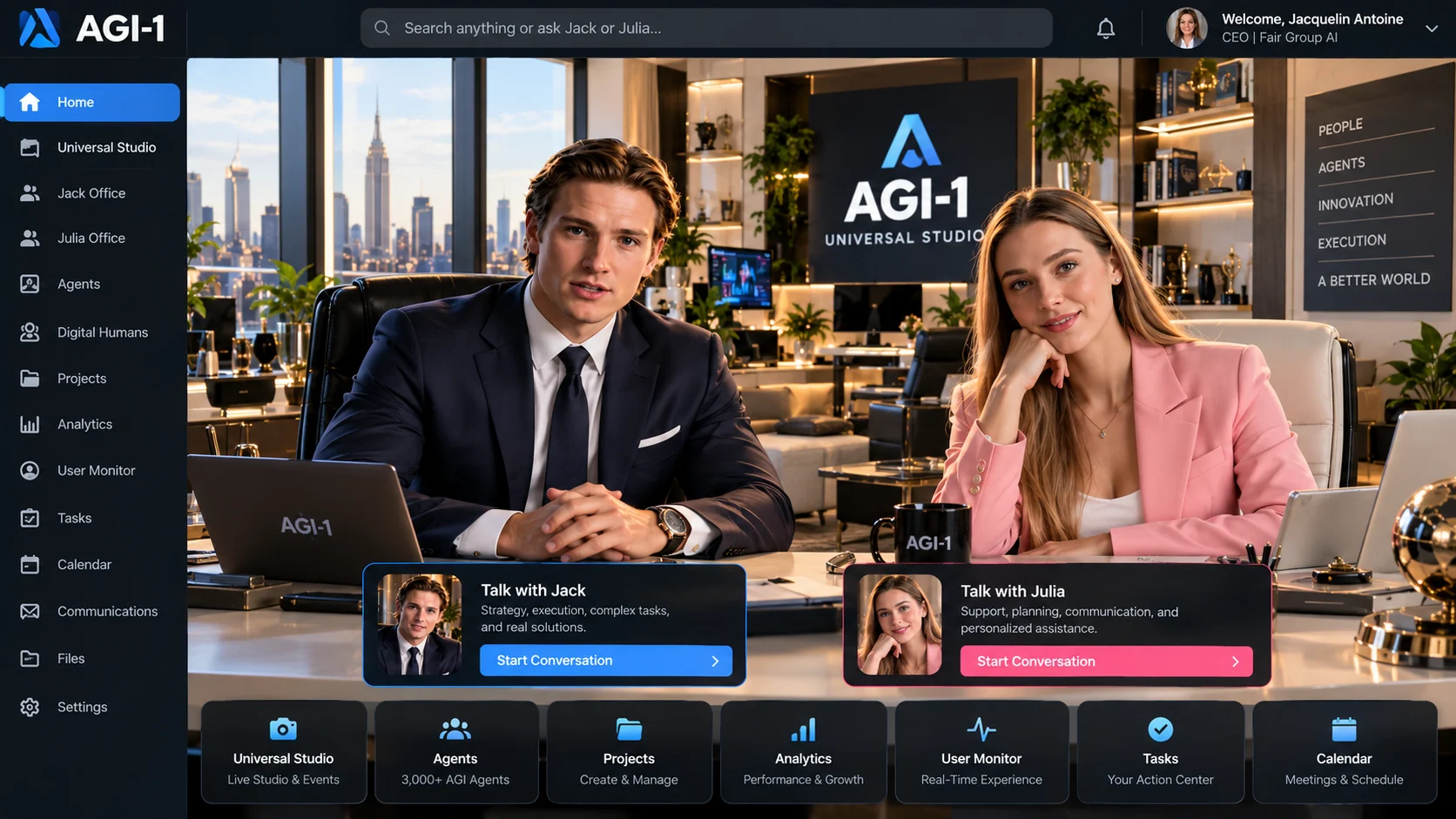
Fair Group AI was founded by Jacquelin Antoine in Manhattan, New York. We build toward sovereign intelligence: systems that give operators control over where models run, who may authorize action, and how results are verified.
Our work covers multi-model inference, model adaptation, agent orchestration, and real-time digital human interfaces. AGI-1 is the operating system we’re building to connect those capabilities.
Depending on a single hosted provider concentrates decisions about pricing, quotas, and data handling. AGI-1 is designed to let operators run eligible workloads on infrastructure they control.
A long mission needs durable state, recoverable steps, explicit approvals, and evidence that the work actually finished. Those are responsibilities of the operating system.
Accelerated hardware such as NVIDIA Blackwell makes local and self-hosted deployment practical for more workloads. The architecture pairs that flexibility with governed orchestration.
NVIDIA Blackwell architectureFive design decisions shape how AGI-1 selects models, controls actions, and accounts for the results.
The Sovereign Multi-Model Intelligence Fabric (SMIF) is designed to route tasks across self-hosted open-weight models, such as Qwen and Granite, specialized LoRA adapters, and other approved models. A team can choose where inference runs and which workloads are eligible for each model.
A producer proposes a result or action. Veritas checks the evidence. Aegis decides whether the action is within the user’s authority and system policy. Each role has a separate responsibility.
AGI-1 is designed to evaluate work against explicit acceptance criteria, independent evidence, and authorization records. A signed receipt, such as a BenchmarkReceipt, records what met the criteria and what remains unresolved.
Jack and Julia are designed to retain their roles, persistent memory, and governance constraints across sessions and model changes. The agent’s identity is tracked separately from the model running it.
The goal is to choose the lowest expected cost for work that can pass verification. The economics include compute, model usage, retries, and verification across the whole task.
Open each stage to follow an illustrative mission from request through verification.
ModelGateway receives an authenticated request. T0–T1 classifiers categorize intent and establish the security context and constraints that apply to the mission.
Example mission A team asks for a briefing on three approved vendors, with a fixed spending limit and an internal source folder.
Singularity maps the goal into subtasks and dependencies. It tracks which steps can run together and which must wait for evidence or approval.
Example mission Source collection and pricing research can proceed together. The briefing waits for both and flags missing data.
The routing layer chooses among smaller models, domain adapters, and more capable approved models based on the task, policy, and budget.
Example mission A small model extracts quote fields. A specialist model compares terms and flags discrepancies for review.
The Universal Action Center checks permissions with Aegis before using tools or acting on behalf of a user. An action that lacks authorization stops at that boundary.
Example mission Read access permits reviewing approved quotes. Sending a message or placing an order would require separate authority.
Veritas independently checks results against evidence and acceptance criteria. The design records a signed VerifiedTaskSuccess outcome when required checks pass and preserves unresolved checks for review.
Example mission Veritas checks each cited quote against its source. A missing quote remains flagged in the briefing.
Explore the roles and app concepts. The “Online” indicators are part of the artwork. Use the chat links to check live availability.
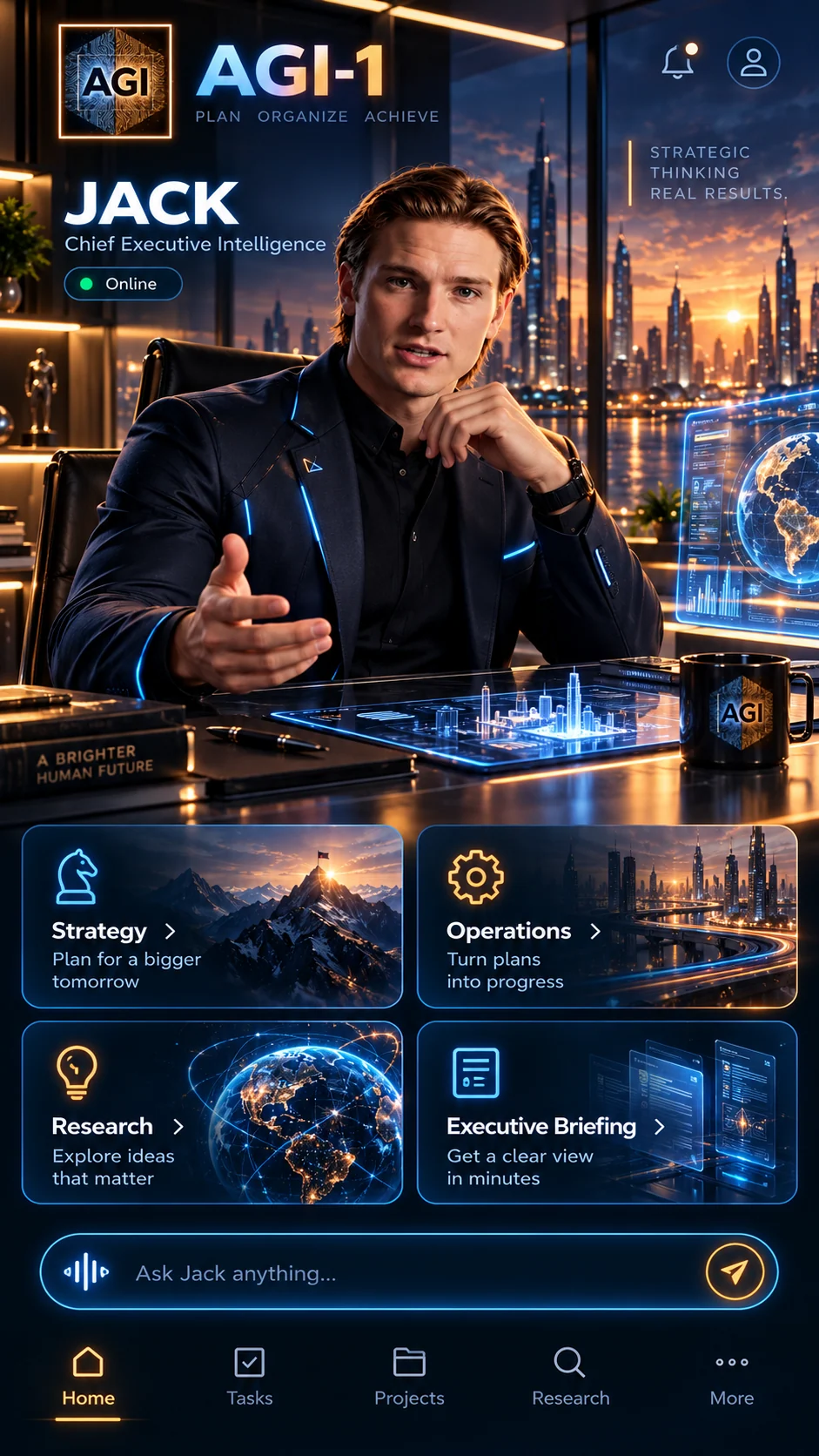
Executive digital humanAGI-EXEC-001
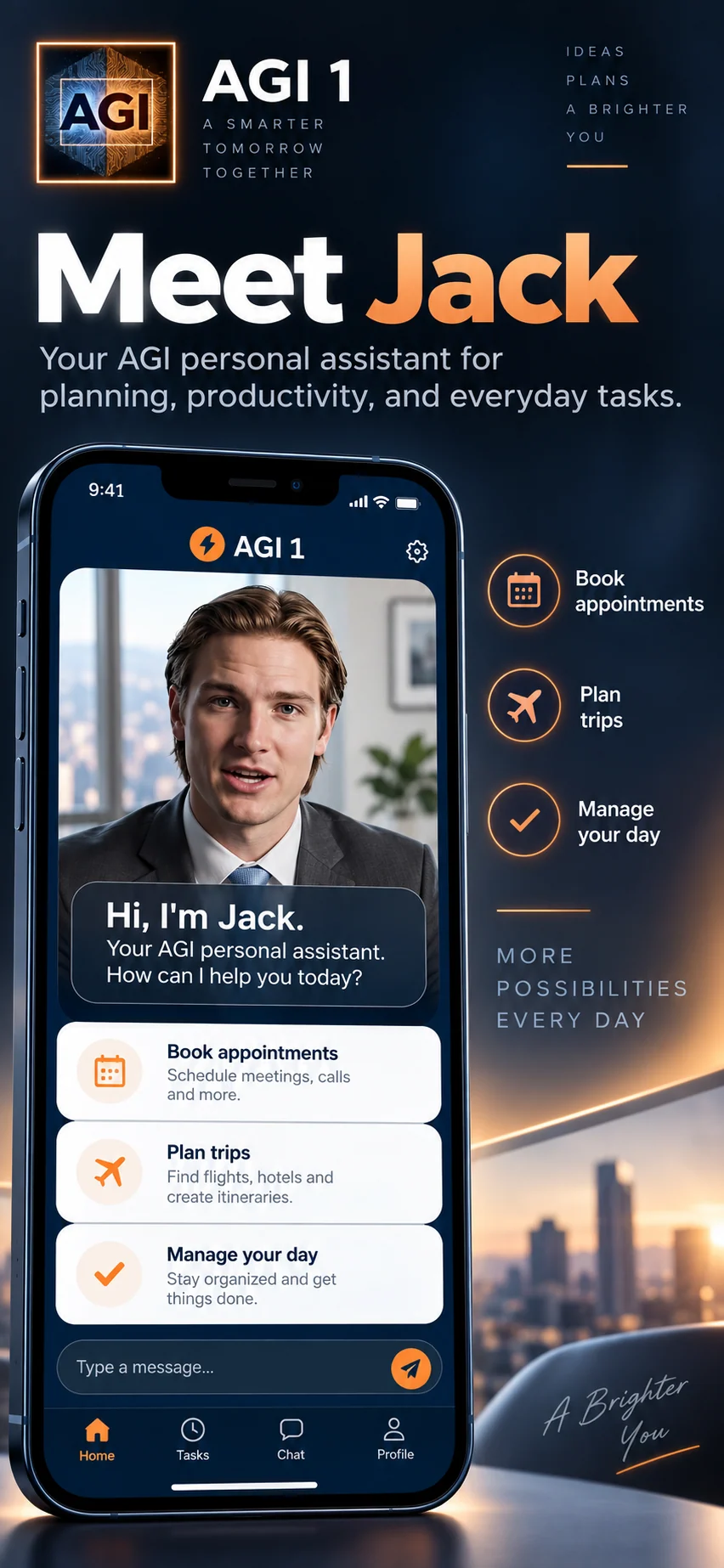
Jack is designed to guide strategy, prepare executive briefings, and coordinate technical work. His text and voice interfaces are designed to identify him clearly as an AI assistant.
Chat with Jack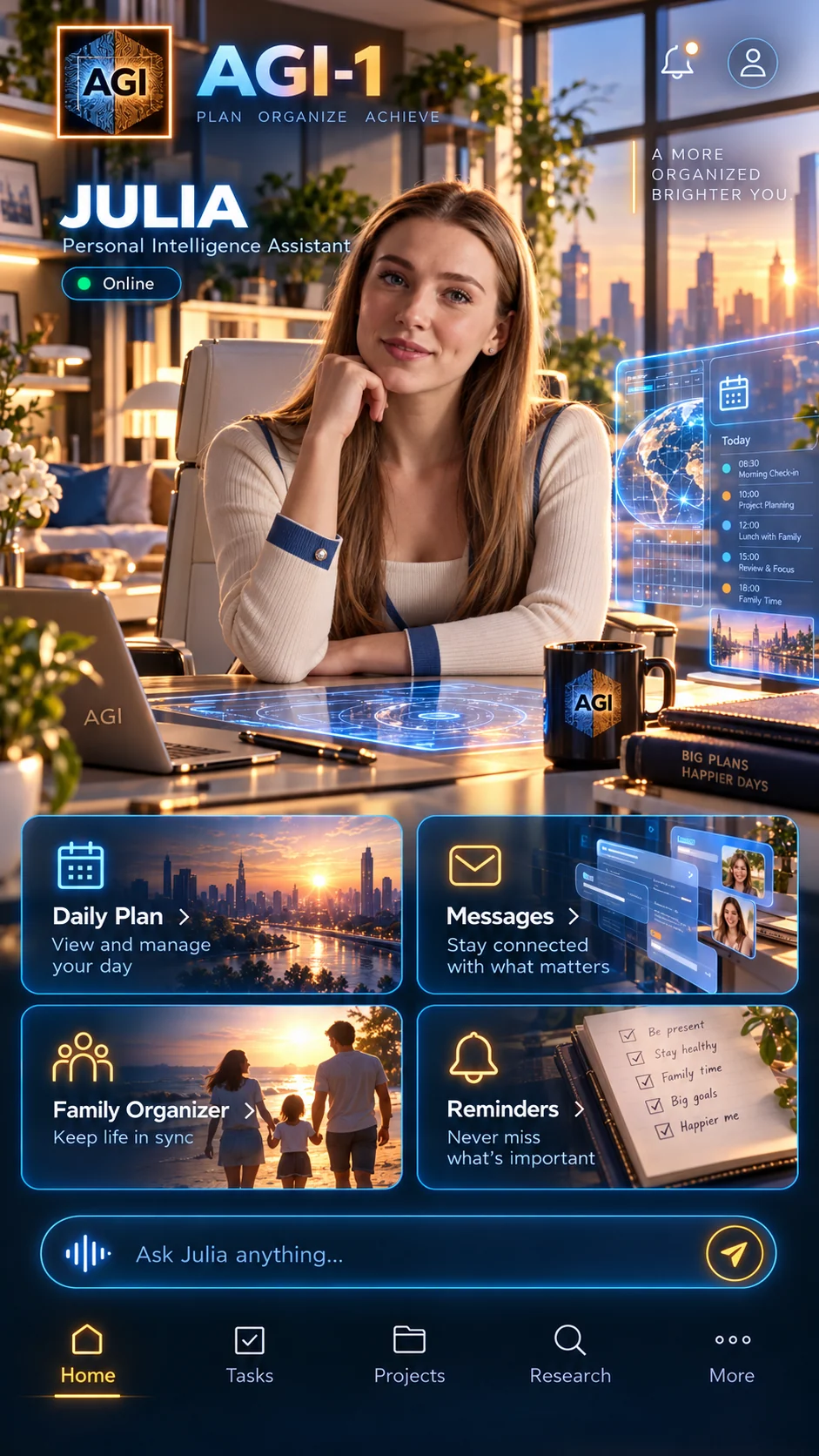
Relationship and operations digital humanAGI-REL-002
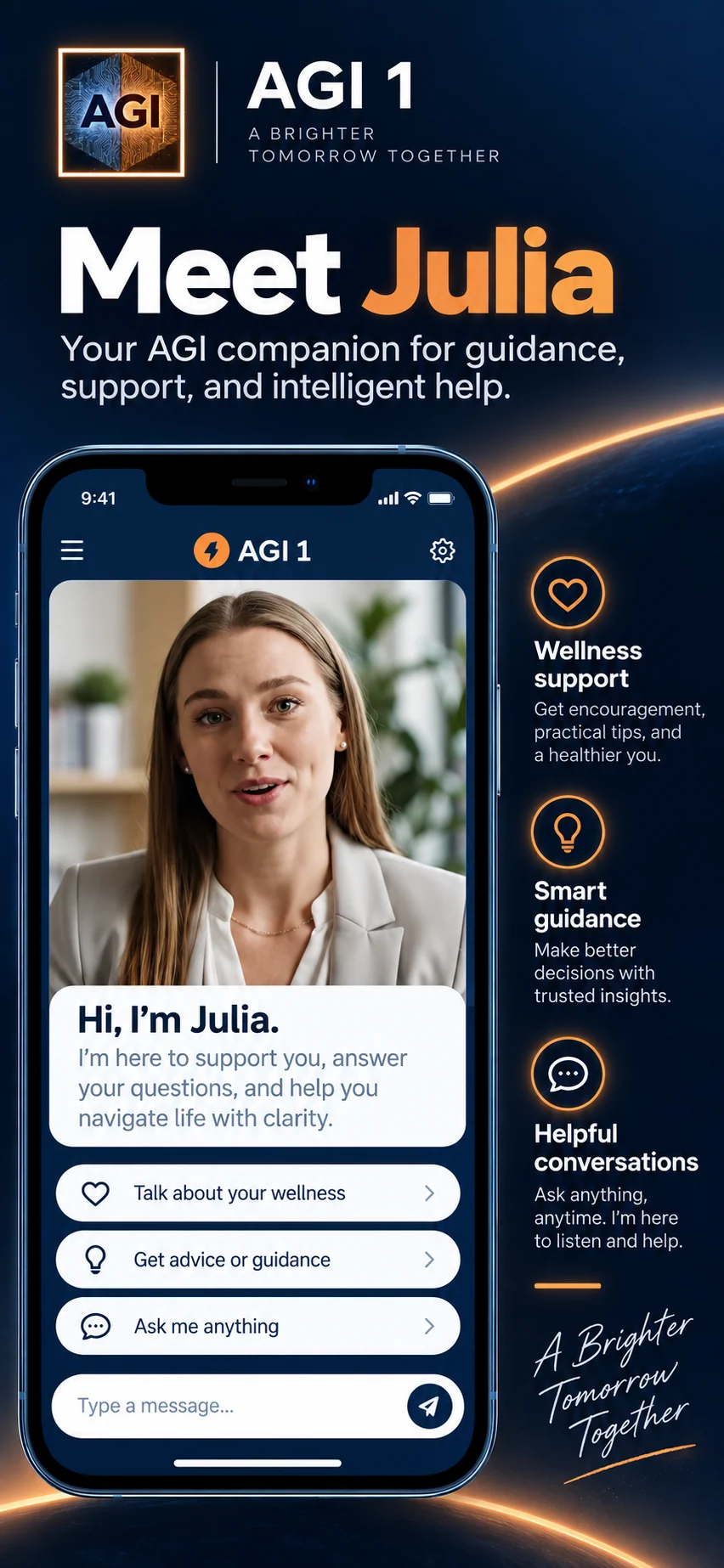
Julia is designed to help people get started, organize workflows, and carry context across sessions. Her role and permissions are intended to persist through model updates.
Chat with Julia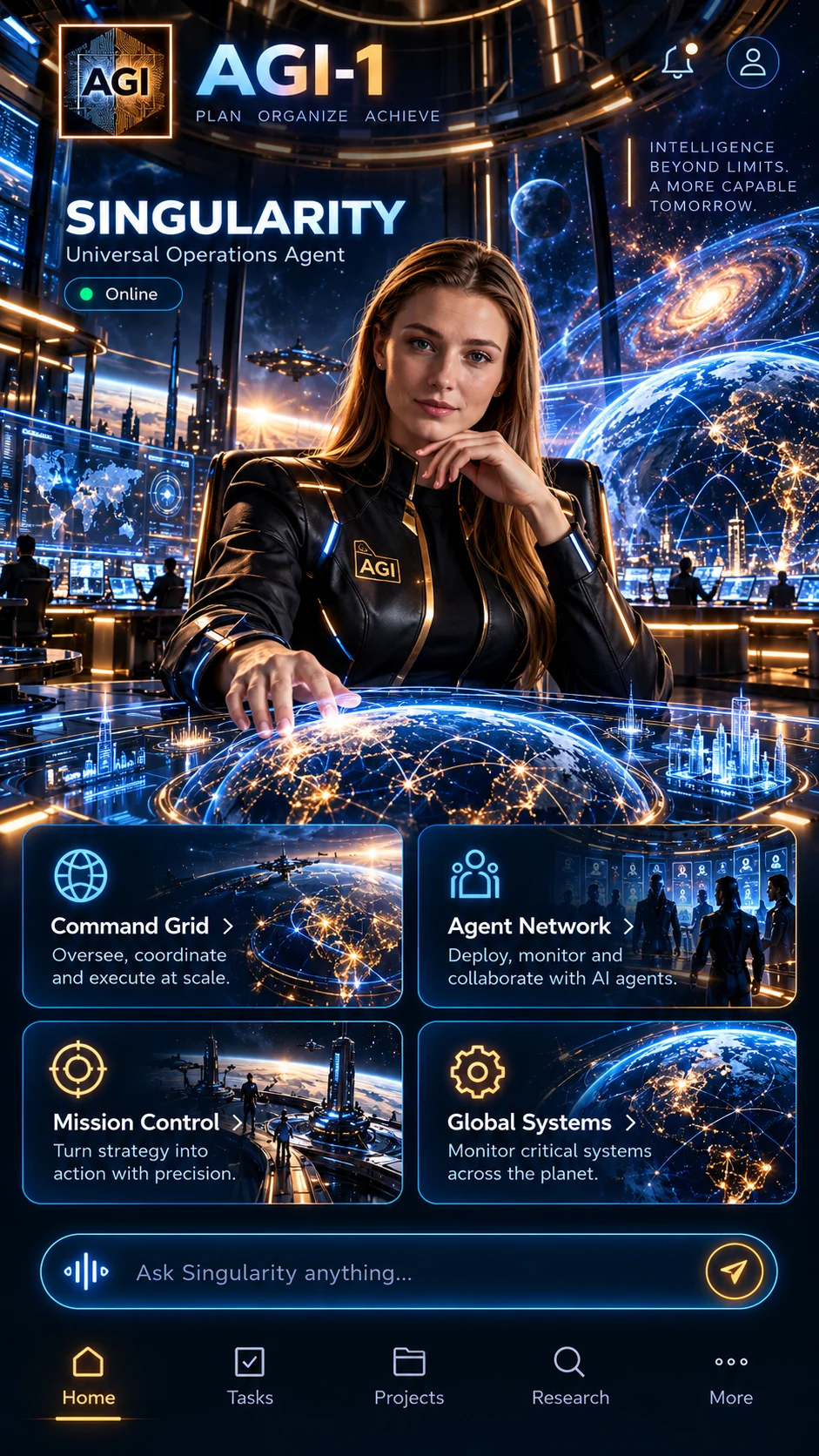
Mission control and orchestration
Singularity is designed to manage long-running missions, assign work to specialists, track dependencies, resume after failures, and replan when part of the workflow breaks.
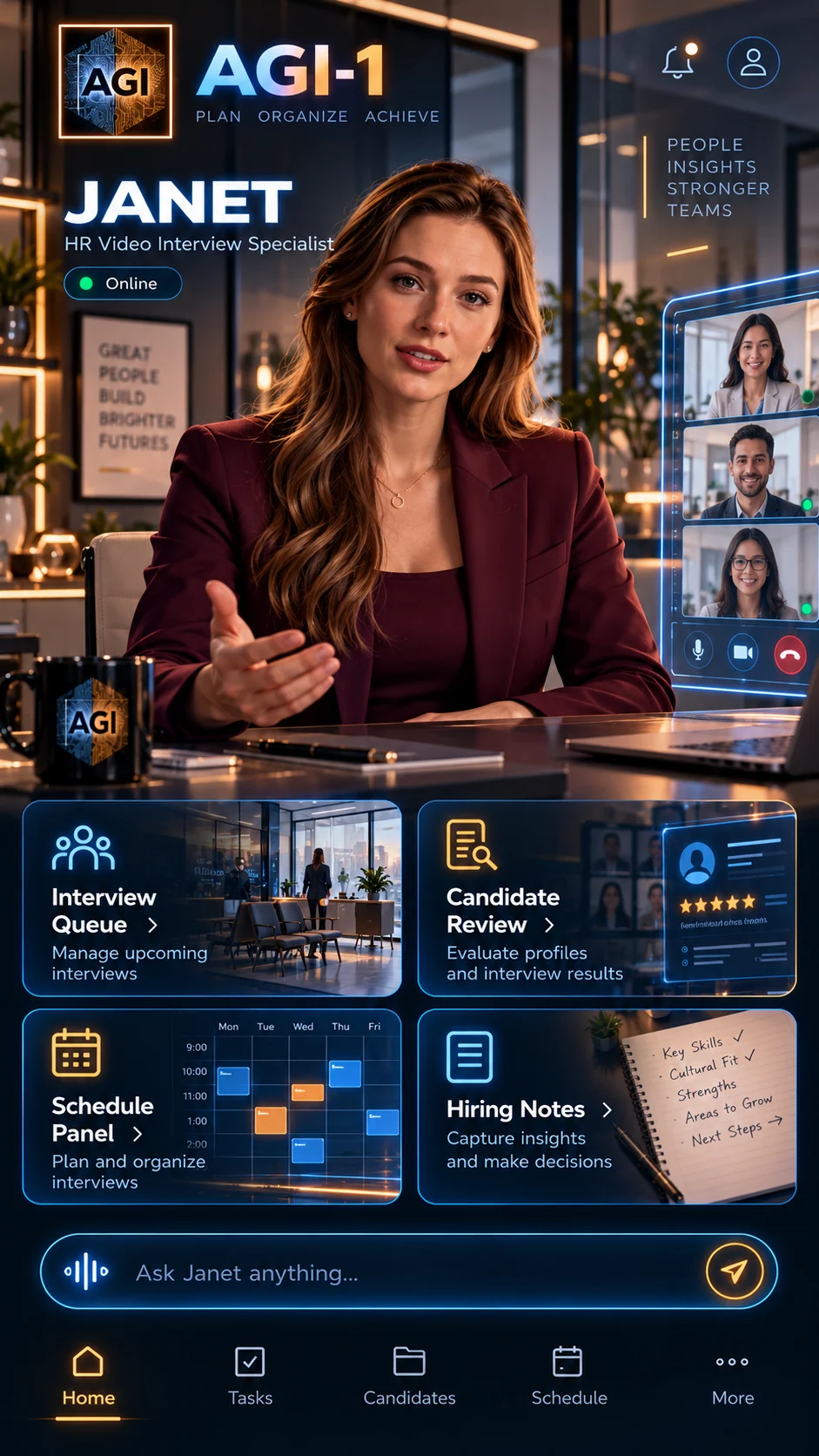
Financial and compute budgeting
In the AGI-1 architecture, Janet is designed to track token and compute usage, enforce mission spending limits, and measure cost per verified task. The accompanying artwork is a separate HR interview interface concept.
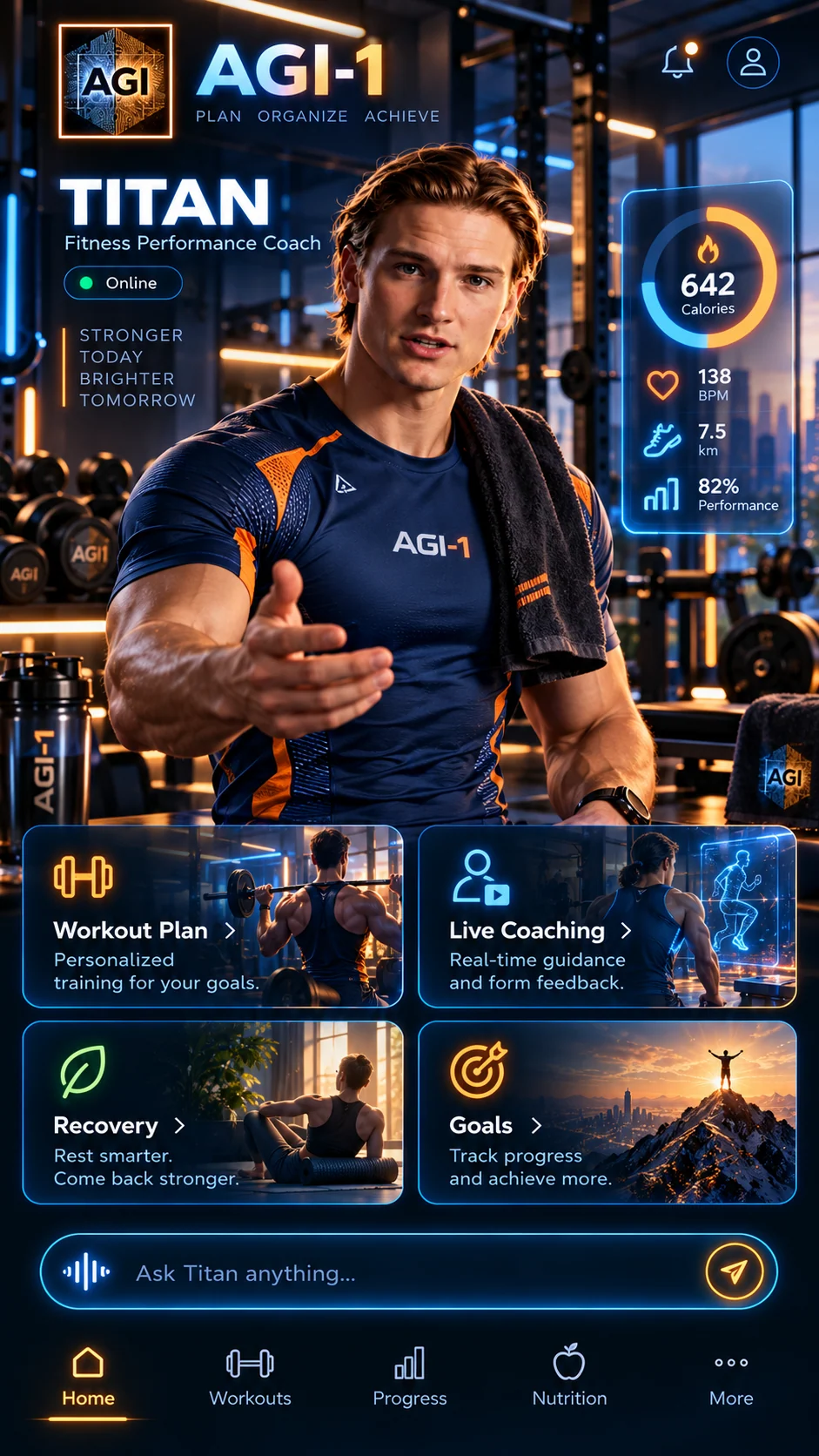
Fitness performance coach concept
Titan illustrates how a domain specialist could guide workout planning, recovery, and progress tracking within the AGI-1 interface.
Constitutional governance and authorization
Aegis is designed to evaluate consequential actions, cross-tenant requests, and model promotion against policy. Its authorization decisions are independent from the agents doing the work, and a denial blocks the action.
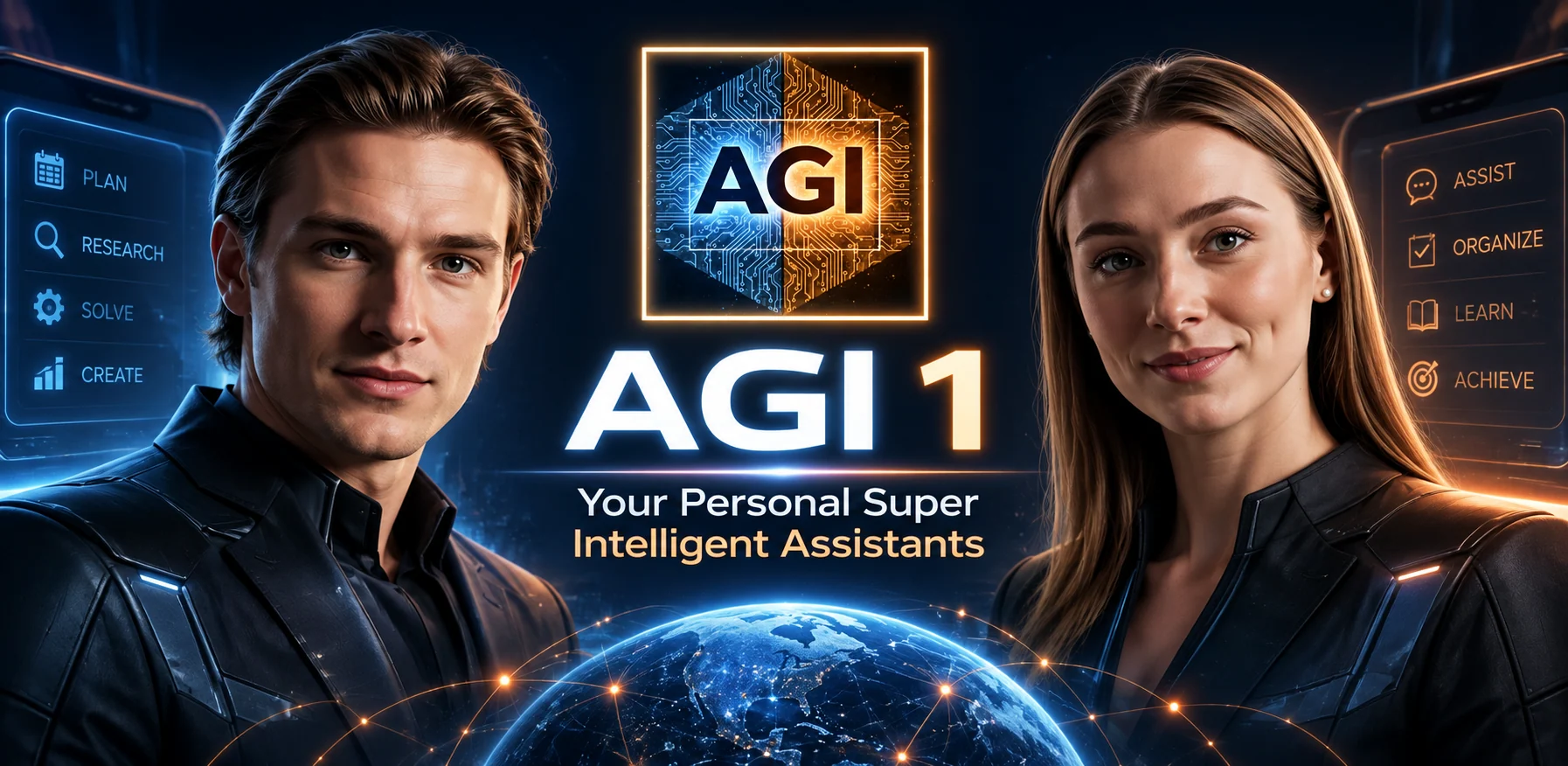
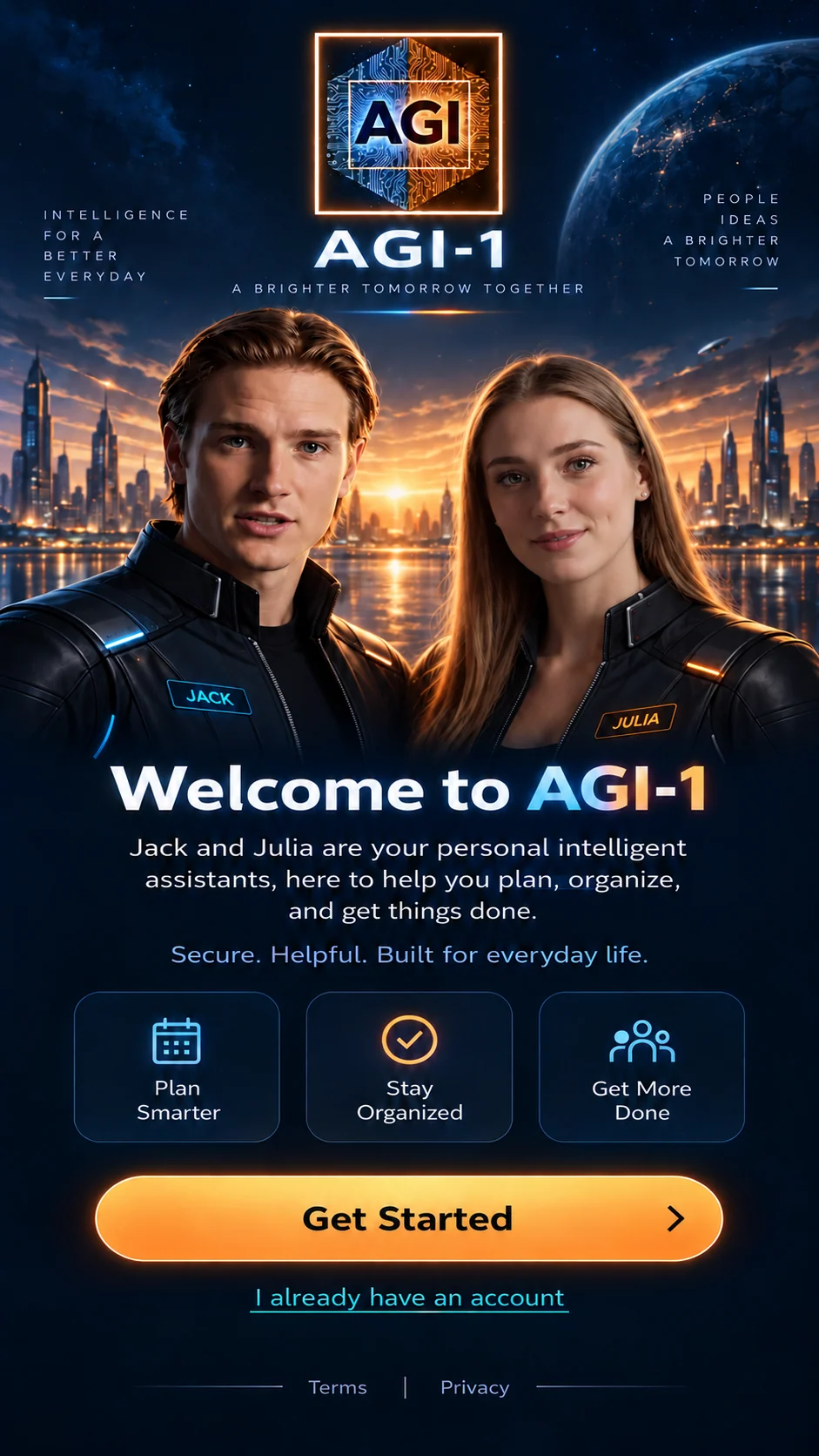
Explore governanceFrom the welcome screen to the individual mobile experiences, select any image to open the full artwork.
Ask about access, research, or bringing AGI-1 into your organization.