Specialist agents that work across your tools, with clear permissions, evidence of what was done, and a budget you control. Start with one workflow and expand where the results warrant it.
Choose the starting point that fits your organization. These are pilot options, with scope and availability confirmed in a deployment discussion.
One founder
Solo founders
A small team of specialist agents for technical planning, market research, and day-to-day operations.
Where to start Turn customer interviews into a brief, a prioritized backlog, and follow-up drafts for review. Use eligible local models to limit per-call API charges and set a budget for hosted models.
Bring the agent into the tools and review process your team already uses.
Engineers and architects
Diagnose defects, propose focused patches, generate regression tests, and prepare codebase refactors. Where authorized, use Claude Code or Codex within existing repository and CI/CD workflows.
Review and evidence Require separate validation, human review, and release approval. Keep tools within the repositories and environments assigned to the task.
Evaluate Orion Model Foundry workflows for dataset curation, QLoRA adapter training, model distillation, and reproducible benchmark runs through AGI1BenchmarkOS.
Review and evidence Record dataset provenance, run configuration, benchmark version, and evaluation receipts before considering a model or adapter for promotion.
Synthesize market research, prepare financial models and variance analyses, and assemble reports or presentations from approved document collections.
Review and evidence Retrieve only authorized client material. Trace key claims to sources, surface assumptions, and route client deliverables for sign-off.
Each use case starts with the systems, permissions, and acceptance criteria that matter for the work.
Healthcare administration
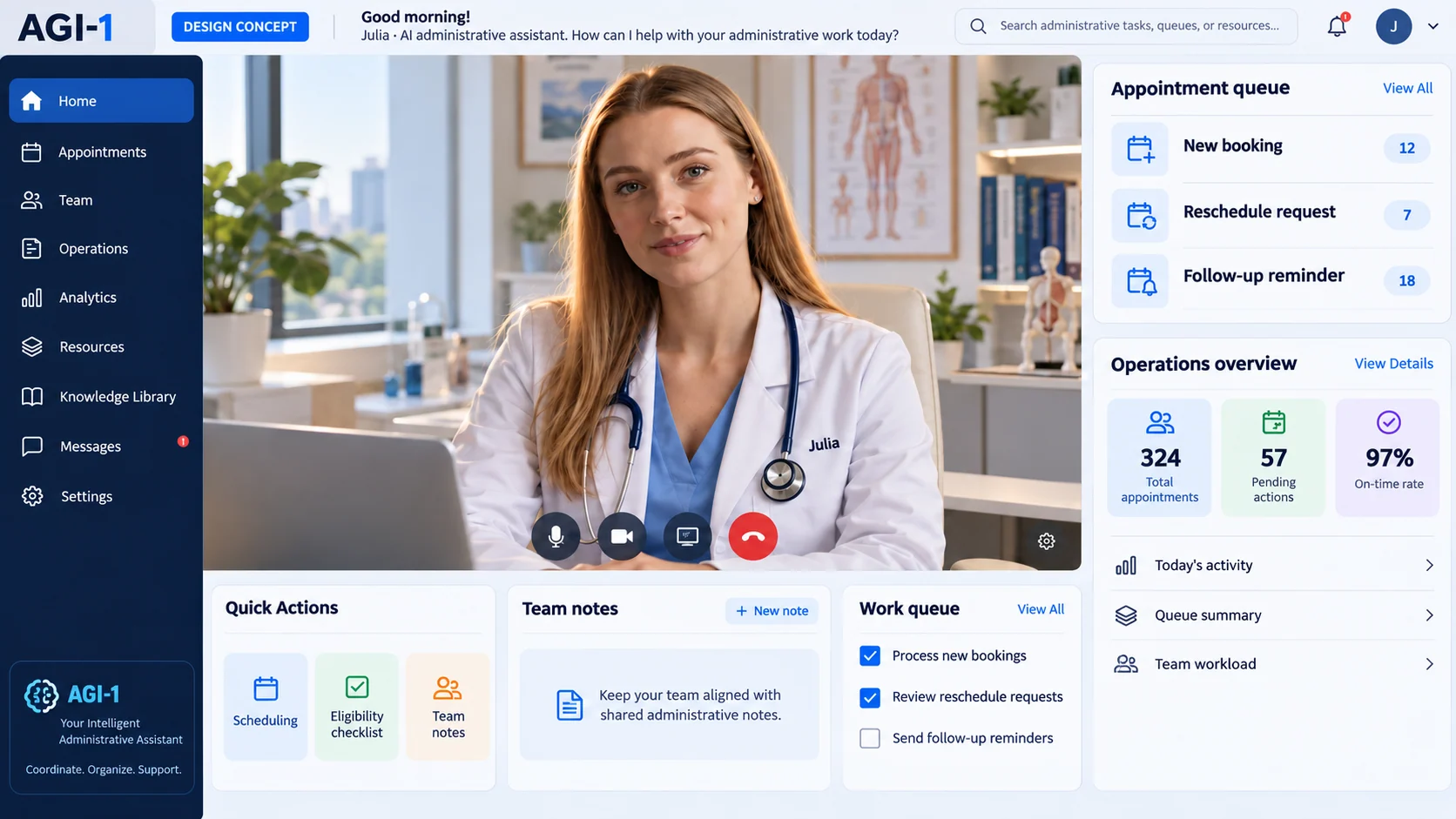
Coordinate appointment requests, manage eligibility checklists, prepare administrative records for review, and organize compliance documentation.
First workflow
Build a front-desk queue from approved scheduling and eligibility systems, with incomplete cases routed to staff.
Controls to define
Start with administrative use and synthetic data. Protected health information requires deployment-specific privacy and security review, approved systems, and applicable agreements. Clinical decisions stay with licensed professionals.
Support sourcing logistics, organize applications for review, schedule interviews, and coordinate employee onboarding.
First workflow
Prepare interview packets against a recruiter-approved checklist and route onboarding tasks to their owners.
Controls to define
People make hiring and employment decisions. Review selection criteria, accessibility, and accommodations before using automated tools in a hiring process.
Triage email and chat, prepare replies from approved knowledge bases, and plan voice intake through Jack and Julia where enabled.
First workflow
Categorize a ticket or call, gather permitted context, and hand it to the right queue with a concise summary.
Controls to define
Escalate sensitive or out-of-policy requests. Measure resolution quality, repeat contacts, and handling time before expanding voice or automated actions.
Two programs extend AGI-1 to everyday work, learning, and career decisions.
Superintelligent Personal Assistant
Jack and Julia are designed to help individuals turn a goal into a plan, prepare research, organize tasks, and follow up across approved tools. A founder can start with a weekly briefing, priorities, and follow-up drafts ready for review.
Prosperity is our economic opportunity program. It explores how AGI-1 could help people find training and work, compare costs and deadlines, and prepare applications. Employers and workforce partners can discuss a pilot for skills development or career navigation.
Tell us which tools you use, who approves the work, and what a successful result looks like. Use synthetic examples when describing work that involves customer, patient, employee, or student records.